
What technical and regulatory parameters really weigh on the feasibility of a construction project in 2026? Between the evolution of the RE2020, the constraints related to clay soils, and the tightening of insurability conditions, several structuring factors deserve detailed analysis. This article measures their concrete impact on the budget, schedule, and construction choices of a new house.
RE2020 and new construction: what changes concretely in 2026
The RE2020 is no longer limited to individual houses. The requirements now extend to mixed projects, extensions, and professional premises. A project owner planning an office adjacent to their house or a significant extension must check the applicable regulations from the preliminary design stage, or risk costly revisions.
This evolution modifies the work of architects and companies from the design phase. The choice of materials, the sizing of insulation, and the use of bio-sourced solutions are no longer just a value-adding option: they condition the compliance of the building permit.
For craftsmen and builders, this also means an increase in skills on technical lots (double flow ventilation, triple glazing joinery, renewable energy production systems) that increase the initial budget but reduce the operating cost of the housing. You can learn more about ARTS Constructions to delve into these topics related to construction and real estate.
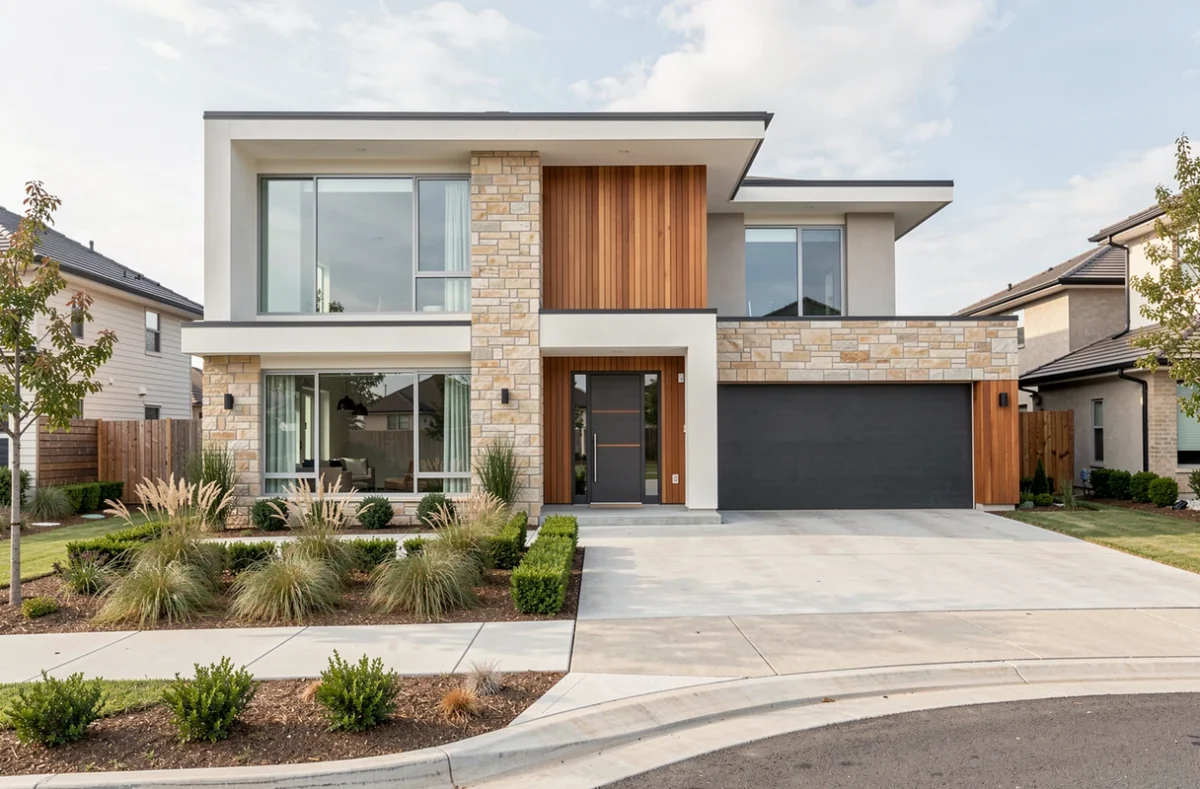
Climate risk and insurability: a design criterion for the site
Anticipating the consequences of climate change on construction sites is becoming an operational issue for the construction sector. Climate risk is becoming a design criterion, not just an environmental topic.
In concrete terms, this affects several stages of the project:
- The work schedule must integrate heatwave episodes and heavy rains, which delay slab pours and weaken materials stored outside.
- The management of rainwater on the site conditions the sizing of drainage networks and may impose retention devices from the earthworks phase.
- The protection of equipment and ongoing works requires tarps, shading devices, or appropriate sequencing, which increases the logistical budget of the site.
For the project owner, the direct consequence is a “climate risk” item to be provisioned in the overall budget. Insurers, for their part, are tightening their coverage conditions in exposed areas. A plot located in a clay or flood-prone area may see its construction insurance premium increase significantly.
Shrink-swell of clays: soil study as a non-negotiable step
The summer of 2026, described as one of the driest, followed by a sudden return of rains, caused cracks in many houses built on clay soils. This shrink-swell phenomenon is not new, but its recent magnitude changes the game for any construction project.
| Risk Factor | Impact on the Project | Preventive Measure |
|---|---|---|
| Identified clay soil | Delayed cracks on foundations and walls | Mandatory G2 geotechnical study before construction |
| Vegetation close to the building | Localized drying of the soil by roots | Distance from plantings or root management |
| Poor water drainage | Sudden rehydration causing swelling | Peripheral drainage and sized evacuation network |
| Undersized foundations | Differential movements and structural disorders | Deep foundations or reinforced footings according to the soil study |
The G2 soil study is the only reliable guarantee against clay-related damages. Its cost represents a minimal fraction of the total budget of a house, but its absence can lead to repairs that exceed several tens of thousands of euros.
The choice of foundation type, anchoring depth, and treatment of the surroundings of the building directly depend on this study. Without it, the risk of structural damage remains high, regardless of the quality of the construction.

Financing a construction: articulating mortgage and work loan
For a construction project, the arbitration between mortgage and work loan deserves to be addressed early. A household acquiring land with a traditional mortgage can finance part of the renovation works (fencing, outdoor developments, equipped kitchen) through a separate work loan, with guarantees and a usury rate different from those of the mortgage.
Granting conditions in the fourth quarter of 2026
The granting conditions remain demanding: personal contribution, debt ratio, and remaining living expenses are scrutinized by banking institutions. The financial setup must be anticipated from the design phase to avoid blockages during the construction process.
The articulation between mortgage for land and structure, and work loan for finishes, requires a financial setup anticipated from the design phase. A broker or a banking advisor specialized in new construction can help optimize this distribution.
The construction project in 2026 hinges on structuring parameters: the nature of the soil, the expanded regulatory compliance of the RE2020, the provision for climate risks and the financial setup between mortgage and work loan. Checking these points in advance conditions the real feasibility of the budget.