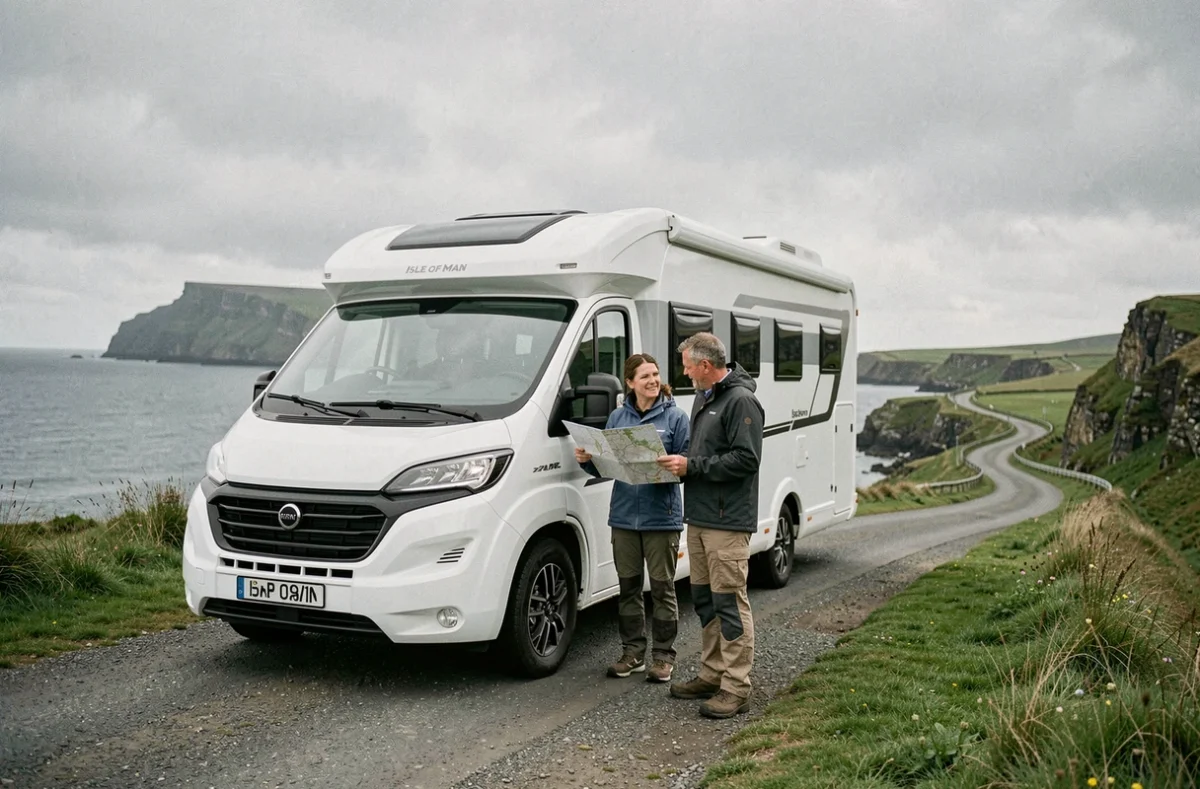
Arriving at the port of Liverpool with a motorhome over six meters long and discovering that the connection to Douglas imposes height and weight restrictions depending on the time of year: this is the kind of unpleasant surprise that dampens a departure. The crossing to the Isle of Man in a motorhome requires preparation well before leaving France. Overnight parking, limited infrastructure in some villages, driving on the left on narrow roads: each step deserves precise anticipation.
Motorhome outside the TT period: infrastructure that doesn’t keep up everywhere
The majority of motorhome travelers heading to the Isle of Man first think of the Tourist Trophy. But outside of race periods, the situation on-site holds less pleasant surprises. Several coastal villages, such as Port Erin, do not have the infrastructure suited for the extended welcome of recreational vehicles.
The local authorities of Port Erin have reported that infrastructure issues need to be resolved before they can properly accommodate motorhomes. Specifically, this means a lack of waste disposal points, dedicated water sources, or marked parking spots in certain areas.
There are also concerns related to waste and wild parking at night. Residents do not hesitate to report vehicles parked outside authorized areas. Relying on improvised parking by the sea is a risky bet: it is better to confirm in advance the available services and the rules of the chosen site.
For those gathering their tips for visiting the Isle of Man in a motorhome, this off-season reality deserves to be integrated right from the planning stage.
Booking the Isle of Man Steam Packet ferry: dimensions and restrictions to check
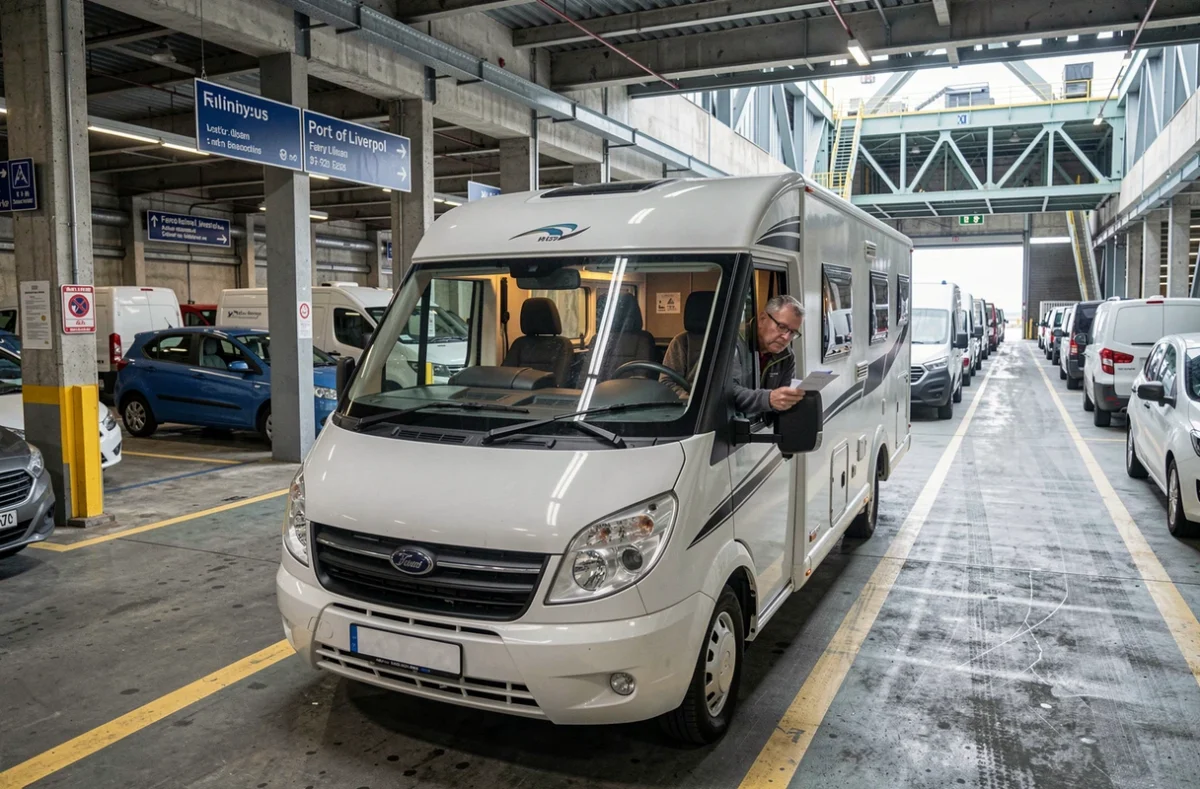
The Isle of Man Steam Packet is the only company that operates the connection to Douglas. Motorhomes up to 7.5 meters can be booked online, but beyond this length or if height and weight limits are exceeded, you must contact the company directly.
During the TT period, restrictions tighten, particularly on the connection from Liverpool. The dimensions declared at the time of booking are checked at boarding: an error of a few centimeters on the total height (with antenna, roof rack, or air conditioning) can lead to boarding refusal.
What to check before booking
- The total height of the vehicle, including roof accessories (satellite antenna, raised solar panel, roof box), measured at the highest point
- The actual total weight in load, not just the manufacturer’s maximum authorized weight, as holiday loading (water, provisions, equipment) often adds several hundred kilos
- The overall length, including rear bike racks or towed trailers, which some online booking systems do not automatically take into account
If in doubt, a direct call to Steam Packet before booking avoids stress on the day. The company also offers connections from Heysham, which may provide more flexibility depending on the period.
Overnight parking on the Isle of Man: local rules and concrete alternatives
The Isle of Man is not a typical British territory: it is a Crown dependency with its own rules. Overnight parking in a motorhome does not benefit from the same framework as on the mainland, and dedicated motorhome areas remain rare.
Douglas, the capital, has a few parking lots where overnight parking is tolerated, but tolerance varies depending on the season and crowding. Outside of Douglas, options quickly diminish.
Three tips for finding where to sleep
- Contact the Isle of Man tourist office (Visit Isle of Man) before departure to obtain the updated list of authorized locations, as this list changes from season to season
- Prefer established campsites, even modest ones, that accept motorhomes and offer at least a water point and waste disposal
- Avoid beach parking lots and residential areas at night: reports by residents are common and can lead to fines or forced relocation
The reflex of “we park wherever we want” that works in some regions of continental Europe does not apply here. Each night must be planned in advance, especially if traveling outside the summer period when some campsites close.
Driving on the left and narrow roads: adapting motorhome driving on the island
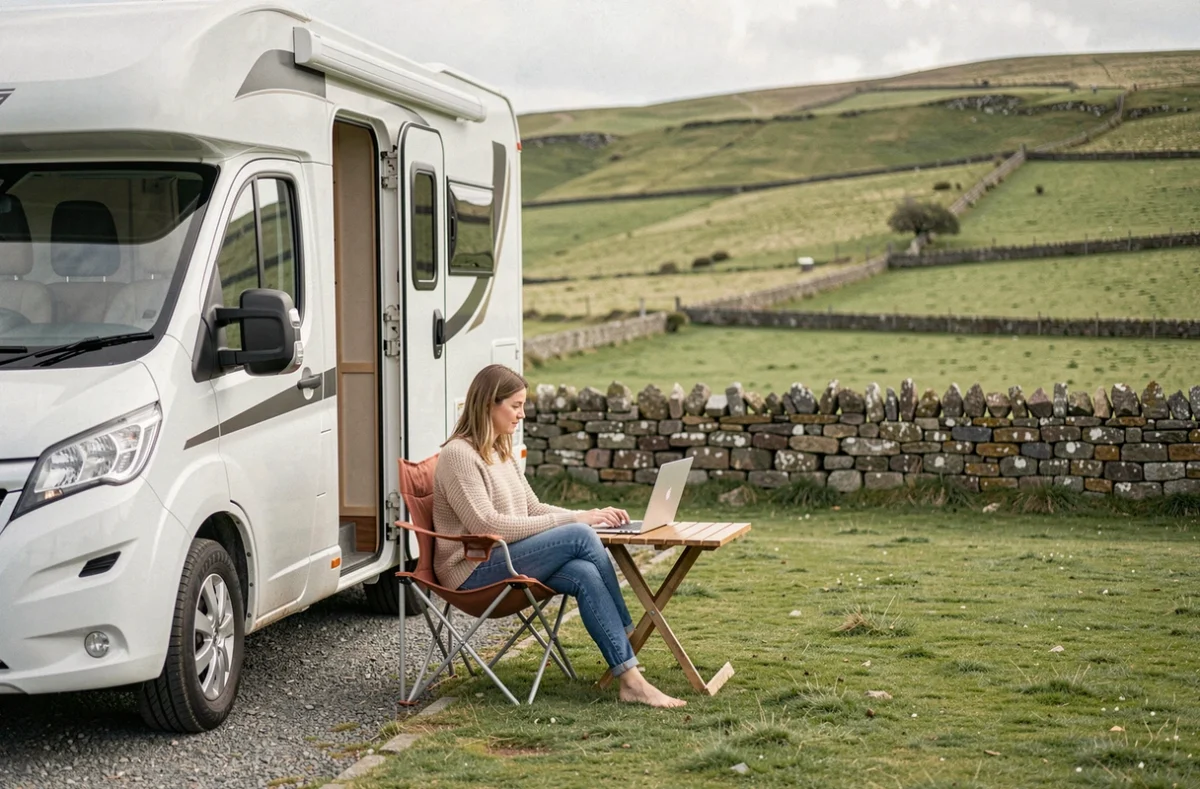
Driving on the left with a wide vehicle on roads that were never designed for continental sizes requires a significant adjustment. The secondary roads of the Isle of Man are often lined with stone walls, with no shoulder or possibility to pull over.
A co-pilot becomes necessary for maneuvers in villages and at intersections with no visibility. One anticipates every crossing with an oncoming vehicle because reversing a six-meter motorhome into a sunken lane bordered by hedges is not pleasant.
A often overlooked point: roundabouts are taken clockwise. After several hours of driving, the continental reflex returns quickly, especially at the end of the day when fatigue sets in. Placing a visual reminder on the dashboard (a simple post-it “clockwise”) is not a silly precaution; it is a habit adopted by many motorhome travelers accustomed to crossings to the British Isles.
The Isle of Man remains a compact territory, which limits daily distances. The absence of a motorway lengthens travel times compared to what one imagines on the map. Planning short stages allows for enjoying stops without turning each day into a marathon behind the wheel.
Traveling in a motorhome on the Isle of Man means accepting a more restrictive framework than on the continent. Infrastructure is evolving, but preparation in advance remains the best lever for a smooth stay. Checking vehicle dimensions, booking nights in advance, and adapting driving to local terrain: three reflexes that make the difference between a successful trip and a series of avoidable hassles.