In the vast universe of horticulture, the cultivation of exotic plants is a field filled with fascination and technical challenges. Among these plants, the peanut stands out due to its unique life cycle and specific needs. Native to South America, this legume has captivated palates around the world and has become a cornerstone of agriculture in many countries. Its ability to enrich the soil with nitrogen, its flowers that burrow into the ground to form underground fruits, and its economic importance make it a captivating case study for enthusiasts of agronomy and botany.
The botanical characteristics of the peanut
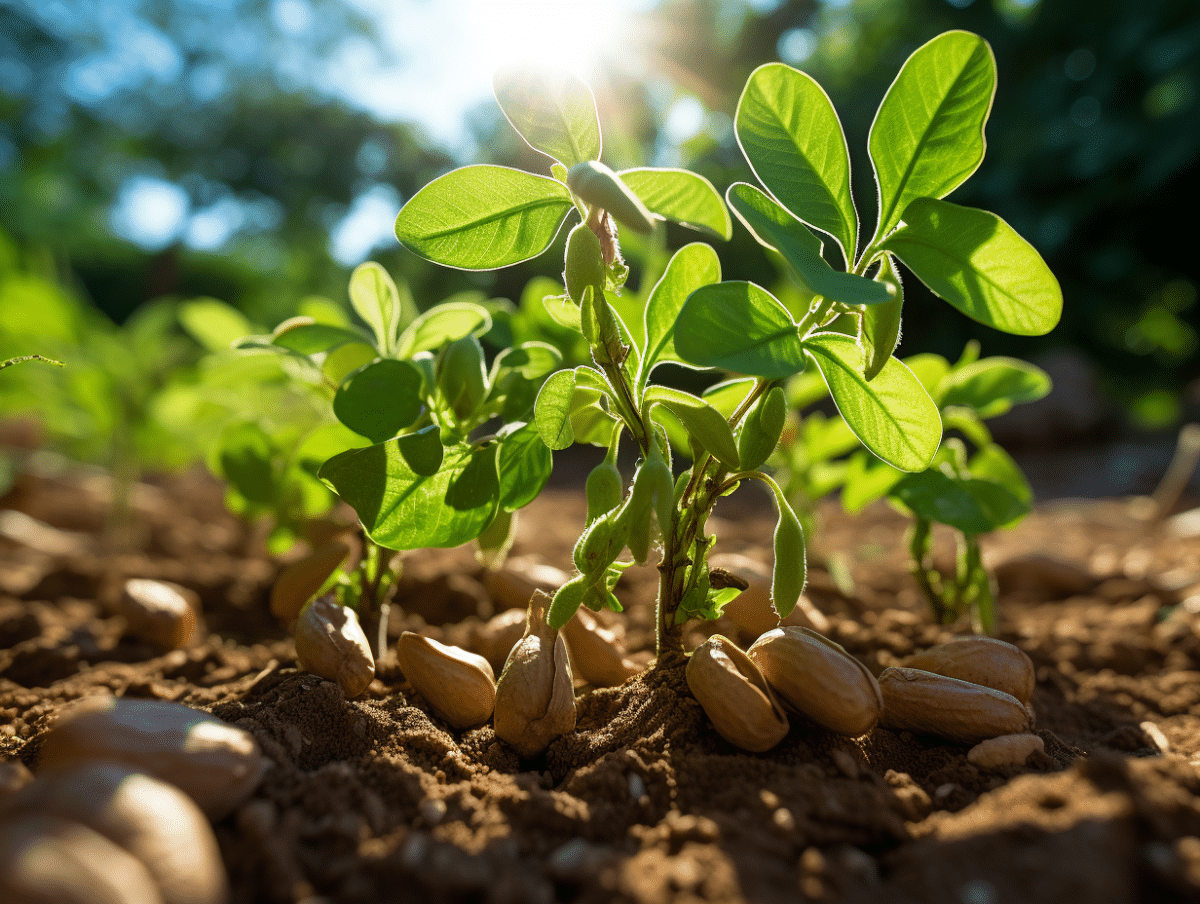
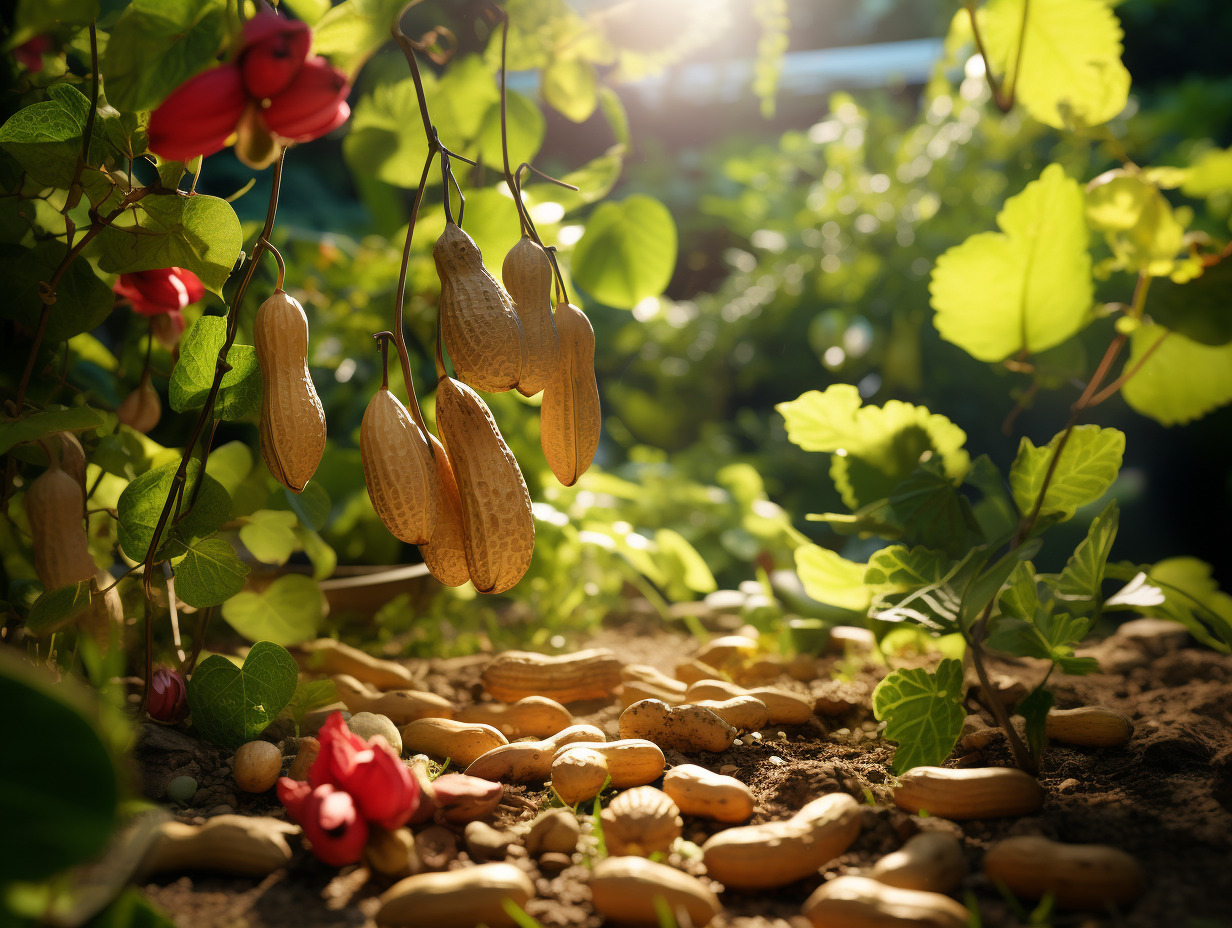
Arachis hypogaea, more commonly known as the peanut, belongs to the Fabaceae family. It is not a peanut tree, but an annual food plant of tropical origin, captivating with its modest stature, rarely exceeding 30 to 35 cm in height. Its yellow flowers, typical of the legume family, harbor an astonishing peculiarity: after pollination, they bend towards the ground where they will bury themselves to give birth to their fruits, the pods containing the famous seeds, better known as peanuts.
These pods, which develop underground, are a singularity in the plant kingdom and pose specific challenges during the cultivation of peanuts. Sowing occurs in spring, in light, deep, loose, and well-drained soil, conducive to the burial of flowers and the growth of pods. Harvesting, at a rate of 75 grams per square meter, usually takes place from October to November, after a growth cycle that requires monitoring and care, particularly frequent watering to support plant development.
The use of peanuts is multifaceted: beyond the consumption of roasted and salted seeds for snacks, the extracted oil is renowned for its very good quality. It finds its place both in food, for its culinary properties, and in industry for its technical uses. The peanut, behind its apparent simplicity, conceals a botanical richness and versatility that make it a subject of study as fascinating as it is essential in the field of exotic plants.
Growing peanuts: techniques and challenges
The cultivation of peanuts, or Arachis hypogaea, requires special attention and agricultural practices suited to its unique nature. Weed regularly to maintain a clean and aerated soil, a sine qua non condition for the proper growth of the plant and the optimal development of the pods underground. Watering, a key element of peanut cultivation, must be frequent and well-measured to avoid excess moisture that could compromise the quality of the harvest, which amounts to 75 grams per square meter.
Peanut producers must also face a series of diseases and pests that can affect the plantations. Rust, powdery mildew, and cercospora are among the most common diseases, requiring constant monitoring and the application of appropriate treatments when necessary. Voles, the peanut worm, nematodes, and other rodents can also harm the crops, necessitating preventive and curative measures to protect the precious legumes.
For peanuts to express their full potential, be sure to choose an adequate soil. A light, deep, loose, and well-drained terrain promotes the proper development of the plant and facilitates harvesting, which takes place from October to November. The quality of peanut oil, highly valued both in food and in industry for its multiple uses, largely depends on the care given to the cultivation of this exotic plant throughout its life cycle.