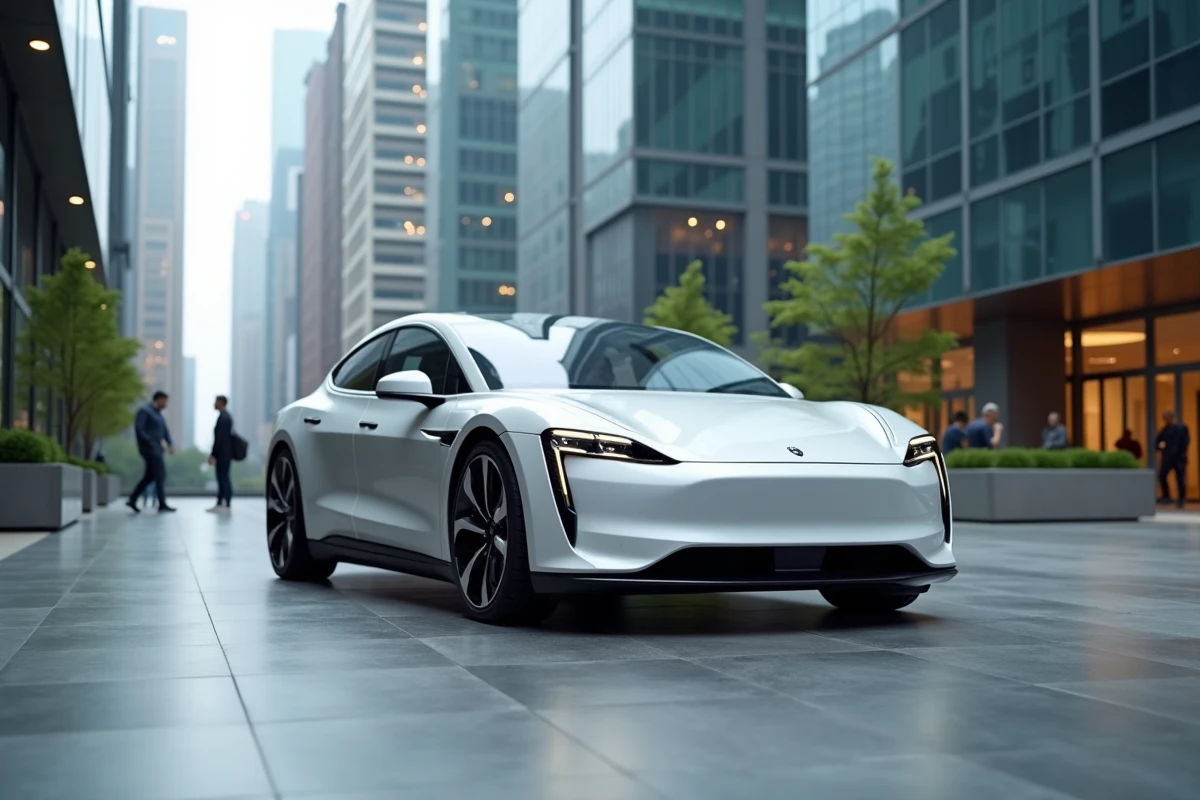
The French automotive market navigated through 2024 with conflicting signals: an increase in electric vehicle registrations, a decline in new thermal model sales, and a used car market that is absorbing a growing share of demand. Measuring these gaps helps to understand where the sector is truly headed, beyond the announcements from manufacturers at trade shows.
Electric vs. Thermal in France: The Power Dynamics in 2024
The most revealing lens through which to view the automotive market in 2024 remains the distribution of sales by powertrain. Electric models are gaining ground in France, but their progress does not follow the same pace across segments.
| Powertrain | Sales Trend 2024 | Main Barrier |
|---|---|---|
| Electric (BEV) | Significant increase | High purchase price, perceived range |
| Plug-in Hybrid (PHEV) | Steady growth | Maintenance complexity, vehicle weight |
| Mild Hybrid (MHEV) | Strong demand | Limited emissions gains |
| Gasoline Thermal | Gradual decline | Euro 7 standards, fuel costs |
| Diesel | Marked decline | Low Emission Zone restrictions, damaged image |
This table highlights a often underestimated point: mild hybrids capture a market share that fully electric vehicles cannot absorb. For some buyers, making the leap directly to BEV remains too costly.
Manufacturers like Renault are adapting their range accordingly, maintaining hybrid powertrains on high-volume models. The analyses available on daily-auto.com detail these trade-offs model by model, with comparisons of price and consumption.

Used Car Market: Why It Matters So Much in 2024
The rise in new car prices is pushing an increasing proportion of buyers towards the used car market. This shift in demand is not trivial: it alters the value chain of the entire automotive sector in France.
Used Electric Vehicles: An Emerging Segment
The first electric vehicles reaching the end of their leases are now feeding the used car market. Models from Renault or Asian brands are appearing at significantly lower prices than new ones, making electric powertrains accessible to an audience that previously could not afford them.
The barrier remains the battery warranty. A used car buyer rightfully questions the residual capacity of the battery after several years of use. Battery diagnostic protocols are becoming widespread, but not all distribution networks offer them yet.
Classic Vehicles: An Expanding Parallel Market
The classic car segment is following a distinct trajectory. Restrictions related to low emission zones (LEZ) are prompting some collectors to anticipate their purchases, fearing they may no longer be able to drive freely.
Vehicles over thirty years old benefit from a derogatory status that exempts them from circulation bans in LEZs. This rule fuels sustained interest in models from the 1980s and 1990s, whose prices in the collector market are steadily rising.
Emission Standards and LEZ: Regulatory Constraints Redefining Supply
The European regulation on CO2 emissions reached a new level in 2024. Automakers must comply with average emission thresholds across their entire range sold, under penalty of substantial fines.
- The average emission thresholds push manufacturers to sell more electric or hybrid models to offset the thermal vehicles remaining in the catalog.
- LEZ are expanding to new urban areas in France, limiting the circulation of the most polluting vehicles and accelerating the renewal of the fleet.
- Some manufacturers are exploiting temporary exemptions to keep thermal models in production as limited series, a strategy targeting buyers attached to this type of powertrain.
The combined effect of these constraints accelerates the reshaping of automotive supply, but unevenly across segments. City cars and compacts are shifting to electric faster than SUVs or utility vehicles, where the weight-range ratio remains unfavorable.

Connected Vehicles and Assisted Driving: What 2024 Has Really Changed
Announcements around embedded artificial intelligence multiplied during the 2024 Paris Motor Show. Several manufacturers presented level 2+ assisted driving systems capable of managing trajectory and speed on highways without continuous driver intervention.
However, no mass-produced vehicle sold in France in 2024 offers widespread level 3 autonomous driving. Approvals remain limited to very specific conditions (traffic jams, reduced speed). The gap between demonstrations at shows and the reality of the rolling stock remains wide.
The most adopted connected functions in 2024 relate to remote software updates, thermal pre-conditioning of the cabin, and predictive navigation integrated with real-time traffic data. These services generate a subscription-based business model that most manufacturers are gradually deploying.
Vehicle Cybersecurity: An Underestimated Technical Challenge
The proliferation of connected interfaces (mobile apps, charging stations, OTA updates) expands the potential attack surface. The UNECE R155 regulation, applicable to new models approved in Europe, requires manufacturers to implement a cybersecurity management system throughout the vehicle’s lifecycle.
This regulatory obligation has led several manufacturers to withdraw older models from the catalog rather than bring them into compliance, which has reduced the available supply in certain segments.
The automotive market in 2024 is more clearly understood through its regulatory constraints and powertrain trade-offs than through the concept cars presented at trade shows. The structuring data remains the shift in demand towards hybrids and used cars, two segments that neither manufacturers nor public authorities had anticipated at this scale.