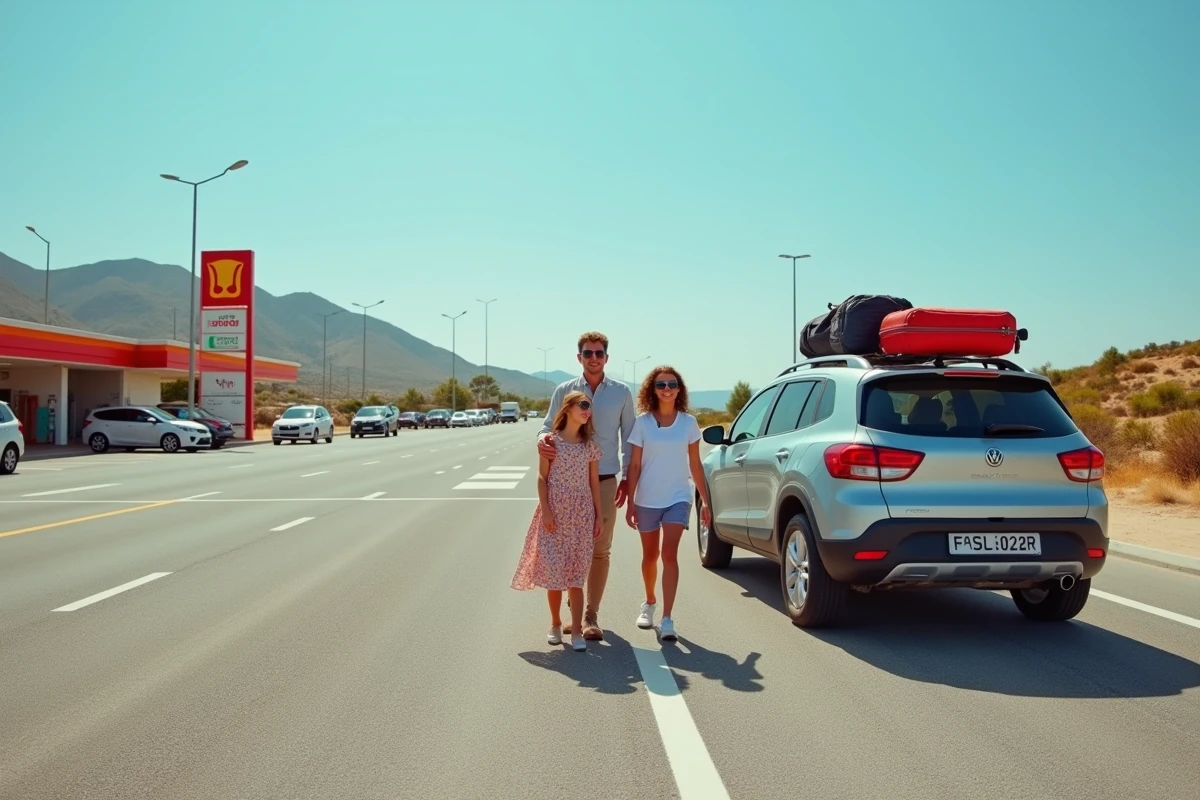
On Spanish highways, not all rest areas are created equal. Since several sections of toll roads have become free again, summer traffic has significantly increased on certain routes, and not all rest areas have kept up in terms of maintenance or services. Knowing where to stop is part of the journey just as much as choosing the route.
Free highways and saturation of rest areas: how traffic has changed
Since September 2021, sections of previously toll highways in Spain have become free. The direct consequence: a marked increase in summer family traffic on these routes. The rest areas located on these free sections are welcoming more vehicles, including motorhomes, without their infrastructures always being upgraded.
In July-August, some previously quiet rest areas become saturated. Parking spaces are scarce, restrooms are overwhelmed beyond their capacity, and trash bins overflow more quickly. The former toll highways converted into free access roads concentrate this phenomenon, especially along the Mediterranean coast.
Have you ever noticed that the rest areas closest to major coastal cities are often the least pleasant? It’s not a coincidence. The free access has redistributed traffic flows without redistributing resources. When planning your rest areas on highways in Spain, prioritizing less busy sections of autovias remains the best strategy for finding decent stops.
miDGT app and safety: preparing your breaks before you leave
Since 2024, the DGT (Dirección General de Tráfico) recommends using its official app miDGT to check the status of rest areas in real-time. The app reports temporary closures for construction or incidents, high accident zones, and rest areas that are actually open on your route.
This is a tool that few French drivers are aware of. Before leaving France, download miDGT and set your route. You will know in advance if the rest area you were aiming for is closed for renovations or if an incident is disrupting access.
Guardia Civil guidelines for stops at rest areas
During the Paso del Estrecho 2024 operation, the Guardia Civil issued specific recommendations for highway breaks:
- Always lock the vehicle, even for a stop of a few minutes at the restrooms or shop
- Never leave valuables visible on the seats or dashboard, including charging cables, bags, or GPS devices
- Park as close as possible to commercial areas or the gas station, avoiding isolated areas of the parking lot
- Reserve prolonged stops (naps, long meals) for areas identified as safe in miDGT
These guidelines are not a matter of paranoia. Theft from vehicles at Spanish rest areas, particularly on routes leading to Andalusia and the Strait of Gibraltar, remains a documented problem by Spanish law enforcement.
Differences between rest areas on autopistas and autovias in Spain
Why do some rest areas offer showers, Wi-Fi, and dining options while others only provide a gravel parking lot and a trash bin? The answer lies in the type of road.
Toll highways generally have better-equipped rest areas. The fees paid by concessionaires fund maintenance, gas stations, and ancillary services. On these sections, you will more often find dining spaces, electric charging stations, and well-maintained restrooms.
Autovias, which are free by nature, depend on the budget of the state or autonomous communities. The level of service varies greatly from region to region. The autovias in Castile-La Mancha or Extremadura, which are less touristy, have rudimentary rest areas. Those in the Basque Country or Catalonia are often better equipped.
Electric charging on Spanish highways
If you are driving an electric vehicle, the coverage of charging stations remains uneven across the Spanish network. Major gas stations on toll highways are starting to equip themselves, but secondary autovias still have gaps in the network. Check the availability of charging stations via a dedicated app before each leg, in addition to miDGT, which does not always cover this parameter.
Concrete criteria for choosing a reliable rest area in Spain
The TCS (Touring Club Suisse) has assessed the quality of rest areas in Southern Europe and confirmed a clear finding: Spain lags behind France in the overall quality of its rest areas. Families, motorhome owners, and electric vehicle drivers are the most affected profiles.
Instead of relying solely on road signage, cross-reference several criteria before stopping:
- Presence of an active gas station (a sign that the area is maintained and frequented, thus safer)
- Proximity to a commercial area or restaurant, which ensures nighttime lighting and regular traffic
- Availability of drinking water, which is not systematic at Spanish rest areas, unlike French ones
- Recent reviews on miDGT or community apps for motorhome users, which quickly report degradations
The best-rated rest areas in this evaluation in Spain were located on toll routes. The three lowest-rated areas shared a common point: the absence of basic services such as clean restrooms or a functional water point.
Planning stops rather than enduring them
On a journey of several hundred kilometers in Spain, spacing your breaks by a maximum of two hours remains the basic safety rule. The DGT reminds us of this every summer. Identify three to four potential rest areas for each segment of your journey, with at least one alternative if the first is saturated or closed.
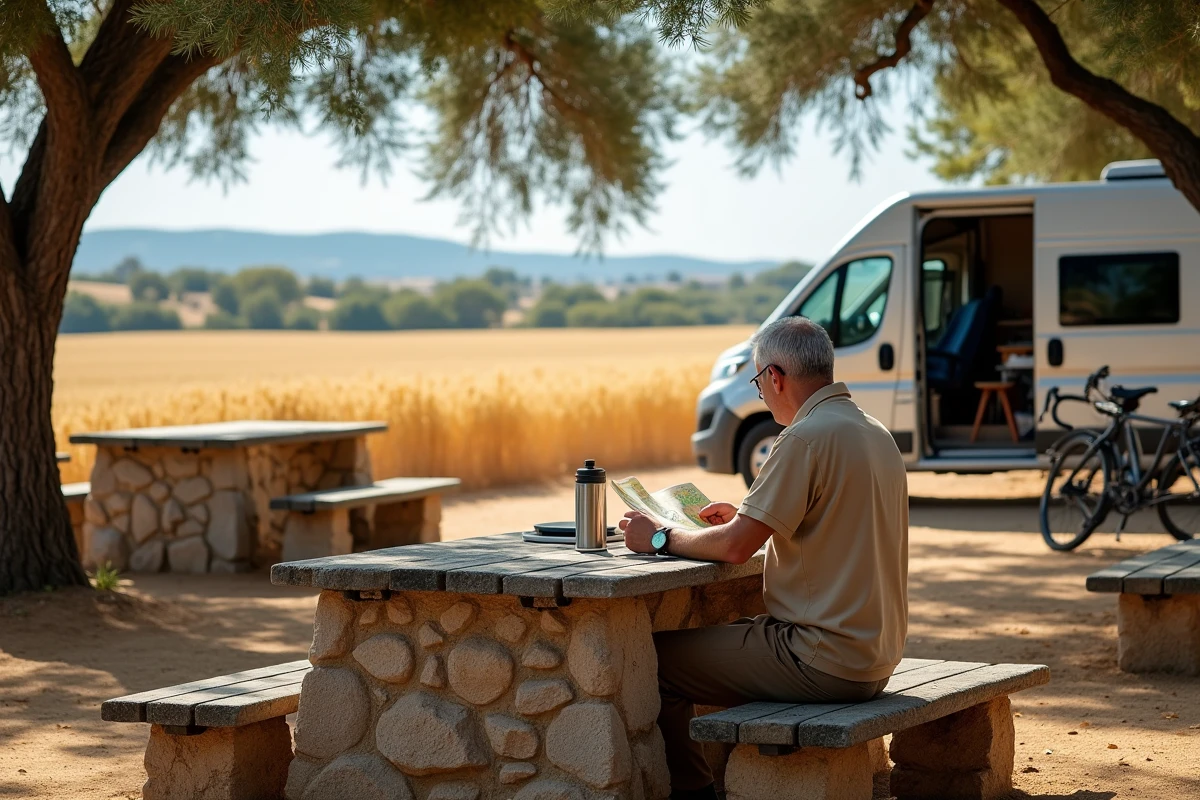
Motorhome drivers should also check that the rest area accepts large vehicles. Some Spanish rest areas restrict access to standard sizes, without clear signage in advance.
The Spanish highway network offers truly good stops, provided you don’t leave it to chance. Cross-referencing miDGT, community feedback, and the type of road helps avoid unpleasant surprises and turn every break into a real moment of recovery.