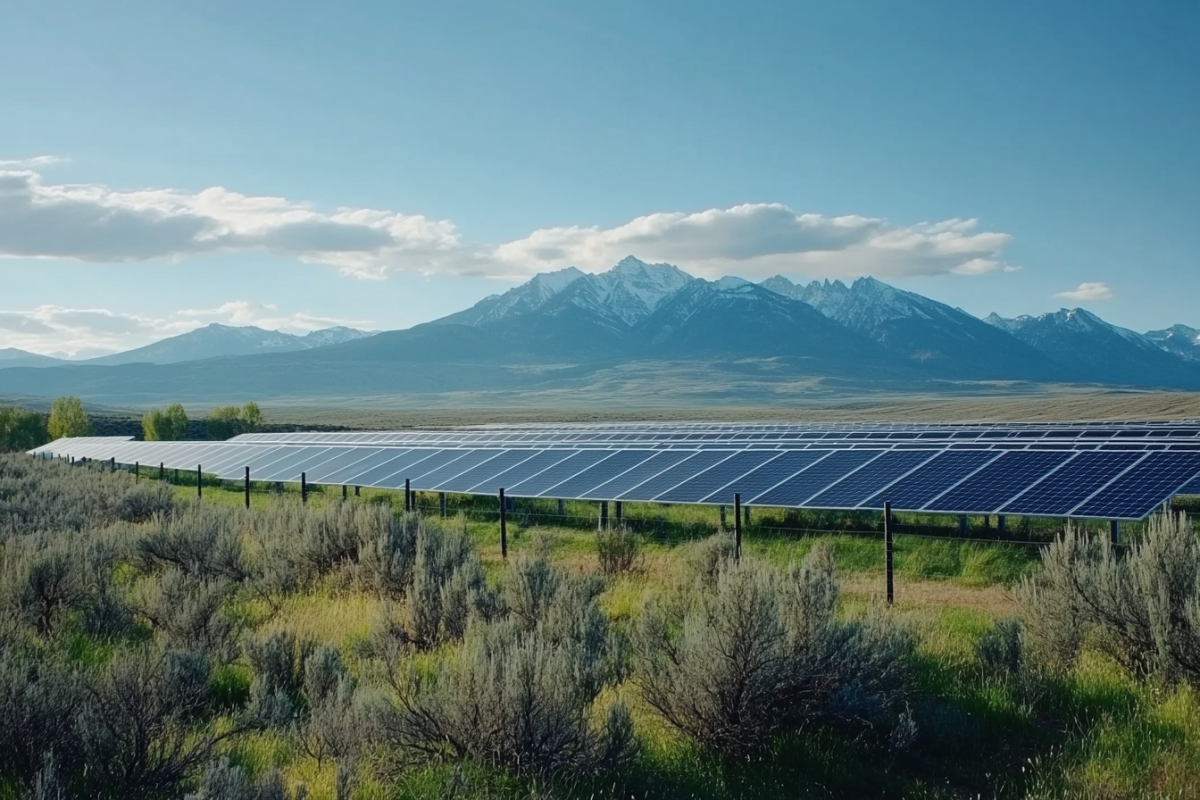
Renewable energies are now at the heart of global concerns, redefining our way of producing and consuming energy. Photovoltaic technology, with its solar panels, is emerging as an essential solution. At a time when fossil resources are depleting and environmental preservation is no longer an option but a necessity, solar energy appears as a promising alternative. Its immense potential and capacity to reduce the human carbon footprint make it a pathway to the future for our society.
The Operation of Solar Panels
Understanding the operation of solar panels is essential to appreciate their impact and efficiency. The technology behind these devices is both simple in concept and sophisticated in implementation.
Photovoltaic panels capture sunlight through cells generally made of silicon. These cells convert light energy into electricity through the photovoltaic effect. The electricity produced is then transformed by an inverter to be compatible with the domestic or industrial electrical grid.
- The photovoltaic cell is the heart of the panel, absorbing light to generate an electric current.
- The inverter plays a crucial role in converting direct current into alternating current.
- Mounting systems ensure the optimal orientation of the panels to maximize solar absorption.
- Batteries can be integrated to store the produced energy and redistribute it as needed.
The Ecological and Economic Advantages
The benefits of solar panels go beyond simply reducing the energy bill, encompassing significant ecological impacts.
Firstly, the use of solar panels considerably reduces greenhouse gas emissions. Unlike fossil fuels, solar energy does not produce CO2 during its conversion to electricity. Secondly, it reduces dependence on depleting resources, offering a sustainable and inexhaustible alternative. Finally, the installation of solar systems promotes energy independence for households and businesses, allowing them to produce their own electricity and stabilize their long-term energy budget.
- Reduction of CO2 emissions: a significant contribution to the fight against climate change.
- Transition to a renewable and sustainable energy.
- Energy independence and autonomy.
The Development of Solar Panels Worldwide
The rapid growth of solar installations around the globe is a testament to their massive adoption and crucial role in the global energy transition.
Governments are investing heavily to encourage the adoption of this technology through subsidies and tax incentives. Continuous technological innovations are improving efficiency and reducing production costs of solar panels. Sunny countries like India, Australia, and certain regions of the United States are particularly benefiting from this, integrating this clean energy source into their national energy plans. Cities are investing in large-scale projects to create solar power plants that supply thousands of homes.
The Challenges to Overcome
Despite their many advantages, solar panels continue to face obstacles that hinder their large-scale deployment. These challenges require solutions to maximize the adoption of solar energy.
- The initial installation costs, although decreasing, remain a barrier for many households and small businesses.
- Managing energy storage, particularly during periods of low sunlight, requires innovations to make solar energy more reliable.
- The recycling of end-of-life panels poses an environmental and economic issue that needs to be addressed.
- Spatial constraints, especially in dense urban environments, sometimes limit the installation of solar panels at the domestic level.
Solar panels, by their ability to produce clean and renewable energy, represent a major advancement in our quest for a sustainable energy future. Although they face technical and economic challenges, their ecological benefits and potential for innovation make them an indispensable pillar of the global energy transition. Their growing adoption reflects a collective awareness, and their development continues to be encouraged by public policies and sustained technological investments. The path to a greener future seems resolutely paved by the light of the sun.